Bedtime calculator
What time should I go to bed?
Tell it when you have to be up, or when you are heading to bed. You get four times that land between sleep cycles, how much sleep each one gives you, and when to start winding down.
Get into bed at one of these times
Change the cycle length
If you often wake naturally a little before or after the times shown, nudge this until the results match your own mornings.
This is arithmetic, not medical advice. Nothing you enter is saved or sent anywhere; refreshing the page clears it.
How the times are worked out
Sleep runs in cycles. Each one moves through lighter sleep, deep sleep and REM sleep, and for adults a full cycle averages about 90 minutes. Many people find it easier to get up when an alarm goes off between cycles than in the middle of deep sleep, when grogginess (sleep inertia) tends to be heaviest.
So the calculator counts whole cycles. Working back from a wake-up time, it subtracts three to six cycles, then subtracts the minutes you need to fall asleep. Working forward from a bedtime, it adds them.
Bedtimes for common wake-up times
Using 90-minute cycles and 15 minutes to fall asleep:
| Wake up at | 6 cycles (9 h) | 5 cycles (7 h 30) | 4 cycles (6 h) |
|---|---|---|---|
| 5:00 am | 7:45 pm | 9:15 pm | 10:45 pm |
| 5:30 am | 8:15 pm | 9:45 pm | 11:15 pm |
| 6:00 am | 8:45 pm | 10:15 pm | 11:45 pm |
| 6:30 am | 9:15 pm | 10:45 pm | 12:15 am |
| 7:00 am | 9:45 pm | 11:15 pm | 12:45 am |
| 7:30 am | 10:15 pm | 11:45 pm | 1:15 am |
| 8:00 am | 10:45 pm | 12:15 am | 1:45 am |
What the calculator cannot know
- Your cycles are not exactly 90 minutes. They commonly range from roughly 70 to 120 minutes, and they change through the night: early cycles carry more deep sleep, later ones more REM.
- Falling asleep is not instant or constant. Fifteen minutes is a reasonable default. A hard day, caffeine or a late screen can stretch it.
- Total sleep still matters most. The CDC lists at least 7 hours a day as the recommended amount for adults. A well-timed four-cycle night is still a six-hour night.
Treat the times as a starting point. Try one for a week, see how the mornings feel, and adjust. If you regularly cannot fall asleep, wake often, or stay exhausted despite enough hours in bed, that is worth raising with a doctor rather than a calculator.
Why the wind-down line is there
A bedtime only works if you are actually ready for bed when it arrives. Most late nights are not lost at lights-out; they are lost in the hour before, to one more episode or one more scroll. Picking a time to start stopping gives the bedtime a fighting chance.

You have the time. Sleepward handles the hour before it.
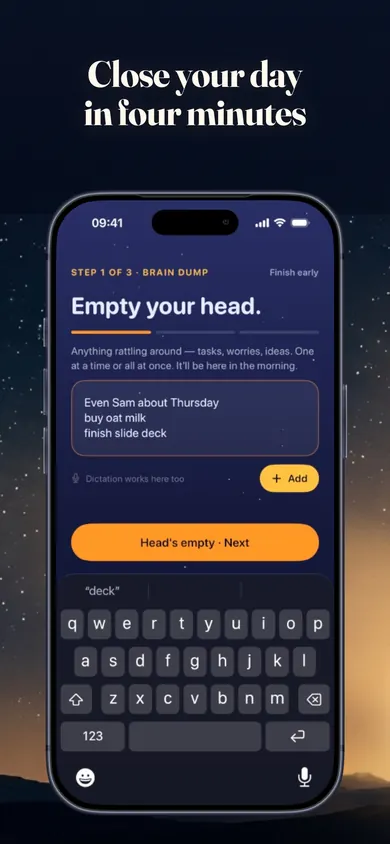
Sleepward: Bedtime Routine is an iPhone and iPad app for the evening itself. A four-minute reset walks you through a Brain Dump and tomorrow's three things, and wind-down routines cover the rest of the evening. Its free tier also lists optional sleep logs, morning check-ins and three noise soundscapes.
Get Sleepward on the App StoreFree to download with in-app purchases. Requires iOS/iPadOS 18 or later. Optional Pro adds more soundscapes and world content; check the App Store for current prices in your region. This calculator does not sync with the app or set an alarm.
Honest Little Apps publishes both Sleepward and this page. It is a companion tool, not an independent review. App details checked November 10, 2026.
Reading this on a computer? Open it on your iPhone