Updated November 2026 · For parents of 5-to-9-year-olds
What to do when your kid refuses math worksheetsFive-minute games, no paper, by grade.
Choose a grade to try one five-minute game at home. Each card gives you a question, an answer to check together and a way to change the difficulty.
Try the same maths in a different format. If a subtraction page stalls at 12 − 4, lay out twelve counters, move four away and ask how many remain. Watching which step needs help gives you something specific to discuss with the teacher.
Five minutes, no paper
Read three picture graphs and use each key to solve six questions about totals and differences.
KindergartenSock count
Start with six socks. Ask the child to make pairs. Count together: three pairs, six socks. Add a seventh sock and ask what stays unpaired.
Grade 1Number line hopscotch
Mark 0 to 20 on a floor or sheet of paper. Start at 7 and hop 5 spaces forward to 12. Hop 4 back to 8. If the count is off by one, touch 7 first and count only the hops.
Grade 2Kitchen shop
Pretend an apple costs 25 cents and a cracker costs 15 cents. Buy both with a dollar: 40 cents spent, 60 cents left. Show the change with coins or ten-cent counters. Switch roles and try new prices.
Grade 3Times-table tennis
Ask, “What is 4 × 6?” Arrange four rows of six objects and count 24. Switch roles: the child asks 6 × 4. Compare the rows and talk about why the total stayed the same.
Grade 4Fraction pizza
Draw a circle divided into eight equal slices. Cover three and ask what fraction is still visible: five eighths. Is three eighths less than a half? Yes: half is four of the eight slices. Try the same questions with a rectangle.
The labels use US grades. Choose the card by the skill your child is working on.
Who this is not for
- A child with a diagnosed maths learning difficulty who has a specialist plan. Follow the plan; these games can sit beside it, not instead of it.
- For assigned homework, ask the teacher which steps they need to see on paper.
- Parents hoping an app will do the sitting-with. Brainy Bucks is five to fifteen minutes a day, and the weekly summary is written for you to act on, not to replace you.
- Android households. It is an iPhone and iPad app.
Questions parents ask
Why does my child refuse math worksheets but play math games happily?
Ask which part feels hard: reading the instructions, choosing an operation, doing the calculation or writing the answer. Try one problem aloud with objects, then try the same numbers on paper. Notice which step changes.
Is five minutes a day enough?
Five minutes gives you time to work through one example and ask the child to explain a step. Choose the next activity based on what you see. The time alone cannot tell you whether the child understands the skill.
Should I just stop the worksheets?
For assigned work, ask the teacher which skill the worksheet practises and whether another format is acceptable. For practice you chose at home, try one of the games and compare how the child approaches the same problem.
Is Brainy Bucks a game or a lesson?
A short daily quest of maths, reading and phonics questions, 5, 10 or 15 minutes, with a Brain Buddy that grows. Difficulty adapts to the answers your child actually gives, missed questions come back in later quests, and skills that went well are checked again days later. Parents get a one-sentence weekly summary and up to three short suggestions you can accept, replace or postpone.
What does it cost?
The free app includes a daily adaptive quest, three extra quests each day, hints and a weekly learning plan. Optional Plus adds unlimited extra quests, the full practice library and additional reports. The US listing offers monthly, yearly and lifetime options. Purchases sit behind a parent PIN.
What ages is it for?
The listing describes Pre-K to Grade 8 content, with the most coverage from Kindergarten to Grade 4. Early readers can hear questions and answer choices aloud on the device.
What the quest looks like
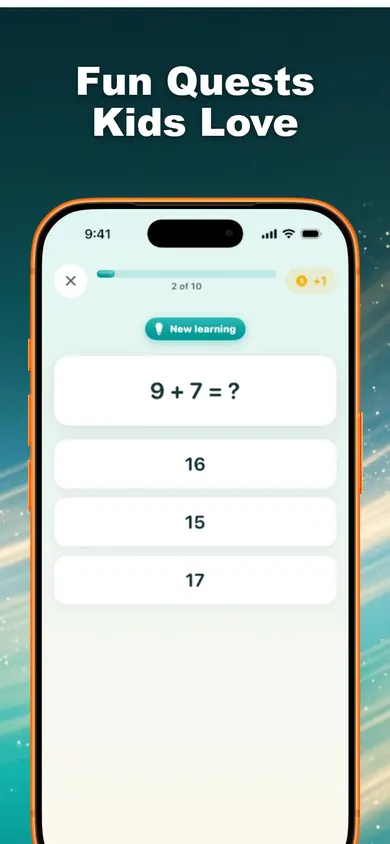
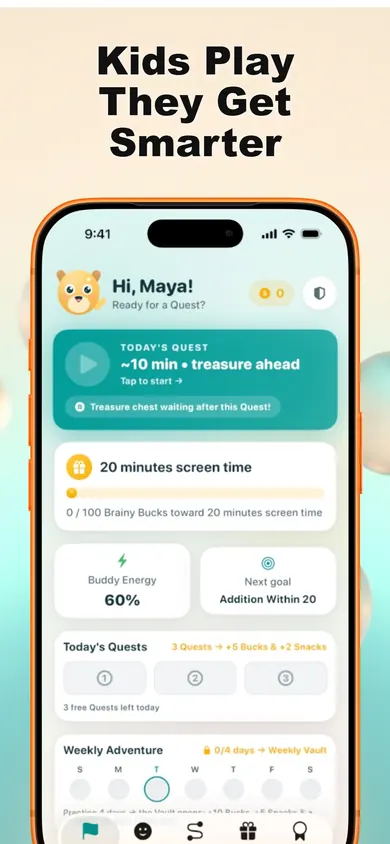
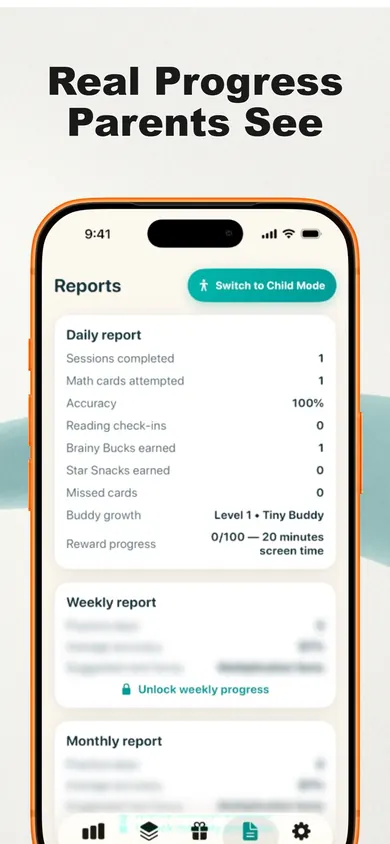
How it works, in three steps
- Pick a length. 5, 10 or 15 minutes. The quest mixes new skills, review and earlier mistakes, and difficulty adapts to the answers your child actually gives.
- Let the mistakes come back. No lives lost, no red X. Missed questions return in later quests, and skills that went well are checked again days later to see whether they stuck.
- Read the one sentence on Sunday. A weekly summary in plain language and up to three short suggestions, each with the reason and how to start. Accept, replace or postpone them.
Sources: What Works Clearinghouse, Assisting Students Struggling with Mathematics (elementary grades); national trends in children's maths at The Nation's Report Card.
Start on your iPhoneTry a daily math and reading quest.
The daily quest and weekly learning plan are free. Optional Plus adds unlimited extra quests and the full practice library. Parents can compare options on the App Store.
- Winter break math practice: 7 myths, 7 facts, 10 minutes a dayWinter break math practice without the worksheet packet: seven myths tapped open, a 10-minute-a-day plan for your child, and what the research says.
- Rounding to the Nearest 10 or 100: Visual Number Line LabSee why a number rounds up or down. Explore a labelled number line, compare distances, and try six free rounding practice cards with explanations.
- Library Elapsed-Time Activity and Separate Answer KeyThree free library timing puzzles: draw minute hops, cross noon, and separate activity time from a break. Read online or print the activity and explained answers separately.
- Elapsed Time Practice with Clocks: Six Minute-Hop PuzzlesPractice elapsed time with six untimed clock puzzles, then use a free three-problem library activity with a separate explained answer key.