Digit span test
How many digits can you hold?
A number appears for a few seconds, then disappears. Type it back. Get it right and the next one is a digit longer. Two misses and the run ends.
The number stays up longer as it grows. No pen, no saying it to a voice assistant: that tests something else.
What this measures
Psychologists call it digit span: the longest string of digits you can take in once and repeat back in order. It is a simple gauge of short-term memory, the mental scratchpad you use to hold a phone number between reading it and dialling it.
What is a normal score?
Most adults land at around seven digits, give or take two. That range is the famous "seven, plus or minus two" from George Miller's 1956 paper on the limits of short-term memory. Five is ordinary; nine is very good.
| Longest span | Roughly |
|---|---|
| 4 or fewer | Below the usual adult range. Tired or distracted? Try again. |
| 5 to 6 | Within the normal range |
| 7 | Right on the classic average |
| 8 to 9 | Above average |
| 10 or more | Exceptional, or you are using a strategy |
This is a casual on-screen test, not a clinical one. One run on one day says little; a noisy room or a short night can cost you a digit or two.
How people remember longer numbers
- Chunking. 4 9 2 1 7 7 6 is seven items. 492 and 1776 is two. Grouping digits into threes and fours is why phone numbers are written with gaps.
- Meaning. A chunk that looks like a year, a price or a familiar code is far easier to keep than a random one.
- Rhythm. Saying the digits to yourself in a steady beat keeps them cycling. Break the rhythm and they tend to fall out.
Can you train it?
You get better at this particular task with practice, mostly by learning to chunk. Whether that carries over to everyday memory is much less certain, so treat the score as a game against yourself, not a measure of how sharp you are.

Liked that? There are five more a day.
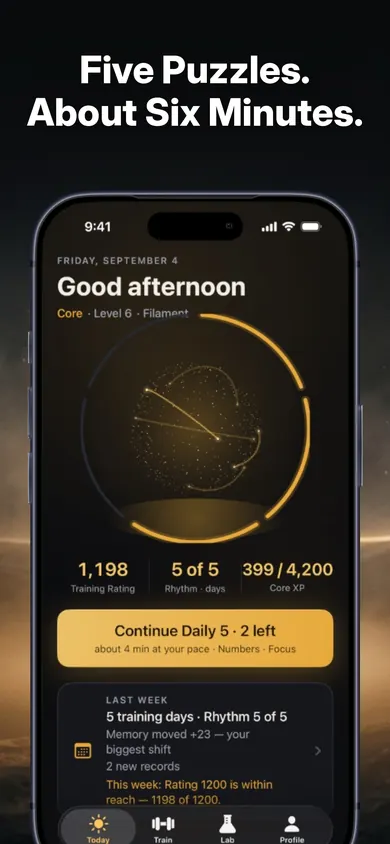
Cognilo: Brain Training Games is an iPhone app of short puzzles. Its listing says the free Daily 5 draws from memory, focus, logic, number, spatial and language puzzles.
Get Cognilo on the App StoreIts listing describes a free Daily 5. Check the App Store for current details on any optional paid features. Brain-training games are practice and entertainment, not a medical assessment or treatment.
Honest Little Apps publishes both Cognilo and this page. This is a separate browser tool and does not sync with the app. App details checked November 10, 2026.
On a computer? Open it on your iPhone