How long without a period is menopause?
Twelve months in a row with no bleeding and no spotting. Put in the first day of your last period and see where you are on that clock.
Definitions from the US Office on Women’s Health, NHS and Mayo Clinic. General information, not a diagnosis.
Menopause is reached after 12 months in a row with no period, no bleeding and no spotting. The US Office on Women’s Health puts the average age at 52 (Mayo Clinic says 51), and the years before it, perimenopause, usually last two to eight years. Skipped periods that come back are common in that time, and any bleeding resets the 12-month count. Any bleeding after those 12 months should be checked by a doctor.

Walk into your next appointment prepared
My Midlife Story: Menopause · free on iPhone
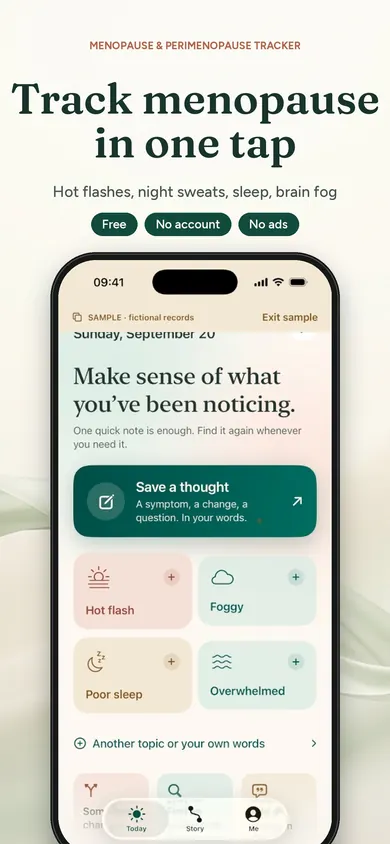
- My Midlife Story logs hot flashes, night sweats, sleep, brain fog, mood and periods in one tap, with the date and time saved for you.
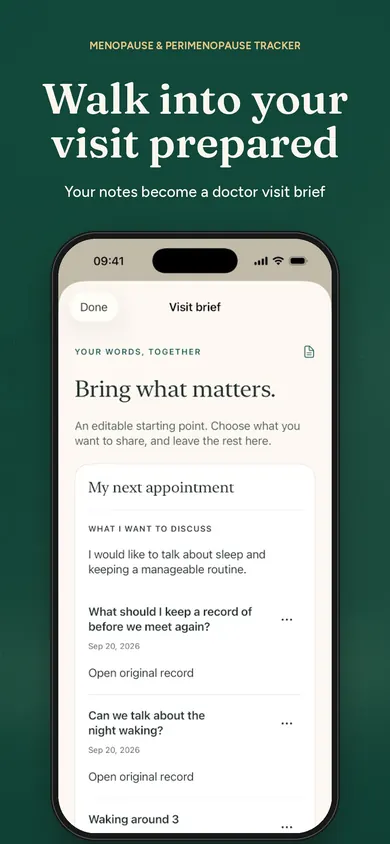
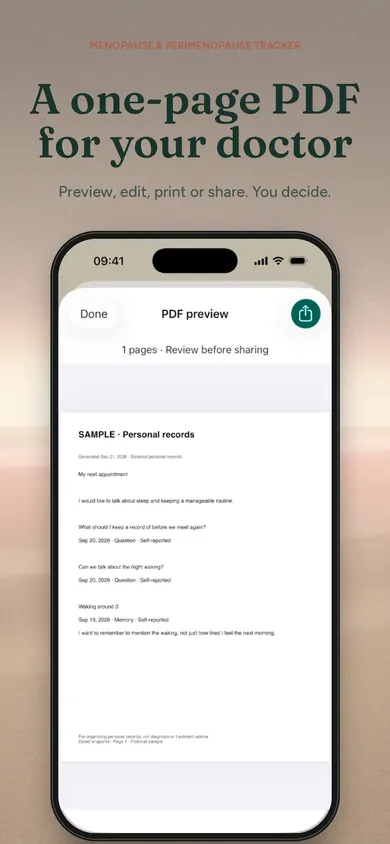
- Keep every question as it comes up, then turn the notes you choose into an editable one-page visit brief and PDF.
- Free, private, no account and no ads. Your notes stay on your phone.
The three stages, in plain words
Why the count keeps resetting
Periods in perimenopause often skip a month and return, or skip a few months and then come back regularly for a while (Mayo Clinic). Each bleed, even light spotting, starts the 12 months again. That is why many women feel “nearly there” for a long time.
It is also why a written record helps. When you can say “my last bleed was 14 March, the one before was 2 November”, your clinician can work with real dates instead of guesses. If you want a quick log of gaps, try the period gap log, and the appointment question builder for the visit itself.
When to talk to a doctor sooner
- Any bleeding or spotting after 12 months without a period.
- Periods that are very heavy, last more than a week, or come very close together.
- Symptoms of menopause before 45, or periods stopping before 40.
- You are not sure whether you still need contraception. The NHS says you still need it for 2 years after your last period if you are 40 to 49, and 1 year if you are 50 or over. HRT is not contraception.
Questions
How many months without a period is menopause?
12 months in a row with no period, bleeding or spotting. Until then you are in perimenopause, even if you have gone several months without a period.
Does spotting reset the 12 months?
Yes. The Office on Women’s Health definition is 12 months with no bleeding, including spotting. Any bleed starts the count again.
What if my period comes back after 12 months?
Bleeding after you have reached menopause is not expected. Mayo Clinic and the Office on Women’s Health advise seeing a doctor as soon as you can, even for light spotting. Most causes are not serious, but it needs checking.
Can I still get pregnant if I have not had a period for months?
Yes, during perimenopause you can still ovulate some months. The NHS says to keep using contraception for 2 years after your last period if you are 40 to 49, or 1 year if you are 50 or over.
I am on HRT or hormonal birth control. Does this work for me?
Not reliably. These can cause bleeding or stop it, so your bleeding pattern may not show where you are. Ask your clinician how they would like to judge it.
Is anything I enter saved?
No. The calculator runs in your browser. Nothing is stored or sent anywhere, and the calendar file is made on your device.
More free tools
- Hot flash trackerTap when a hot flash starts and again when it ends. See how long it lasted, how often they come, likely triggers and a summary for your doctor.
- Perimenopause symptoms checklistA private perimenopause symptoms checklist: tick what you notice, rate how much it bothers you, and get a short summary to copy or print for your appointment.
- Best menopause tracking app for privacy? Five comparedWhich menopause tracking app keeps notes on your phone? Five apps compared from their listings on accounts, data and doctor reports, plus a sample brief.
- Menopause symptom scoreRate 11 common menopause symptoms in under two minutes. Get your total and three subscale scores on the Menopause Rating Scale, plus a summary for your doctor.