A diary is a memory aid. It gives you somewhere to put an observation without having to explain it immediately. You can write an approximate time if that is all you remember, and label it approximate.
Alberta's perimenopause and menopause appointment guidance suggests recording symptoms, when they began, how often they occur, and what you notice around them. It also recommends listing questions and marking your priorities. The sheet below turns that preparation idea into a small, open-ended writing space.
It does not calculate a symptom score, identify a menopause stage or recommend a treatment. If you need care, contact a healthcare professional; you do not need to finish a sheet first.
Your sheet, with room to breathe.
Choose fewer rows for longer notes, or seven rows for shorter entries. Rows are entries, not required days. A blank row is not a report that you had no symptoms.
My notes for a conversation
Dates covered, if helpful: ____________________ Write what you noticed in your own words. Mark uncertain details as uncertain.
Date / time
What I noticed / how it affected my day
What I want to ask or clarify
My main concern or question:
Honest Little Apps / My Midlife Story companion / November 2026 Blank means unrecorded. Notes do not establish a diagnosis or a cause. Share only what you choose.
An original appointment-preparation guide
A note is an observation. A question leaves room to find out.
Before a routine appointment, turn a few notes into a short agenda: what you noticed, what changed in daily life and what you want to understand. You do not need to complete a diary first. This is a writing aid, not a symptom assessment or a way to decide what caused a change.
One completely fictional example
Main concern: I want help understanding some recent changes and what to follow up.
Observations: On 28 October and 2 November, I woke during the night feeling hot. I did not time either episode. I made no entries for the other nights.
Impact: On 3 November I paused an ordinary work task to reread the instructions. I do not know whether this is connected to those nights.
Three questions for the conversation:
What information would help you assess these changes and the possible explanations?
Which options, if any, would fit my situation and priorities, and what should I understand about their benefits and risks?
What should happen next, when should we review it and who should I contact if things change?
Invented words and dates for a writing example. This is not a patient story, medical recommendation or example of an app-generated diagnosis.
What each part does
Keep a date with the observation.
Two recorded nights are two recorded nights. They are not evidence that every other night was symptom-free. The note says what was not recorded.
Leave uncertainty visible.
“I did not time either episode” is more useful than an invented duration. Add details you genuinely remember; mark estimates as estimates.
Describe impact without declaring a cause.
The work example gives a concrete effect the writer wants to discuss. It does not assert that menopause, poor sleep or anything else caused it.
Ask; do not turn a guess into a result.
The questions invite an assessment and a shared next step. They do not ask the diary or this page to choose a treatment.
Use your own words. If you have many concerns, mark the one you most want to discuss first. Bring any separate information your clinician has asked for.
Start with a blank agenda
The template below is deliberately empty. Copy it into a notes tool you choose, download the plain-text file or write the headings on paper. Nothing personal needs to be entered on this webpage. Review what you want to share before showing a completed copy to anyone.
APPOINTMENT AGENDA — BLANK TEMPLATE

Prepared on: ____________________
My main concern or priority: ____________________

What I noticed, with dates: ____________________
What is approximate, uncertain or not recorded: ____________________
How this affected my daily life: ____________________

Three questions I want to discuss:
1. ____________________
2. ____________________
3. ____________________

Notes from the appointment, in my own words: ____________________
The next step and when: ____________________
What I need clarified before I leave: ____________________
Copying only copies this blank template. There is no entry form, upload or saved draft here.
Need to select from notes you already have? The separate choose-lines tool lets you review an excerpt. The fictional example and blank agenda here are original companions from Honest Little Apps, publisher of My Midlife Story; no app is required.
The source, and the limit
The NHS appointment guide recommends preparing a few important questions, taking notes and clarifying the next step. MyHealth Alberta's appointment preparation also suggests recording symptoms and their timing, then marking priorities. Those are the preparation principles used here; the wording, example and blank agenda are original.
Sources checked 5 November 2026. Neither source endorses this guide or the app. This guide does not diagnose, recommend treatment or tell you to wait for a scheduled visit. Contact a qualified healthcare professional when you need care, even if your notes are incomplete.
Three simple ways to use it.
Write an observation. Keep the date with the words. If you are writing later, say what you remember and where you are unsure.
Keep questions separate. You can wonder about an explanation without recording it as an established fact.
Review before sharing. Circle the issue you most want to discuss. Decide what you want to bring and who should see it.
There is no correct number of entries to complete. The four- and seven-row options are layout choices, not tracking schedules. If your clinician asks you to record particular information, follow that guidance rather than this generic sheet.
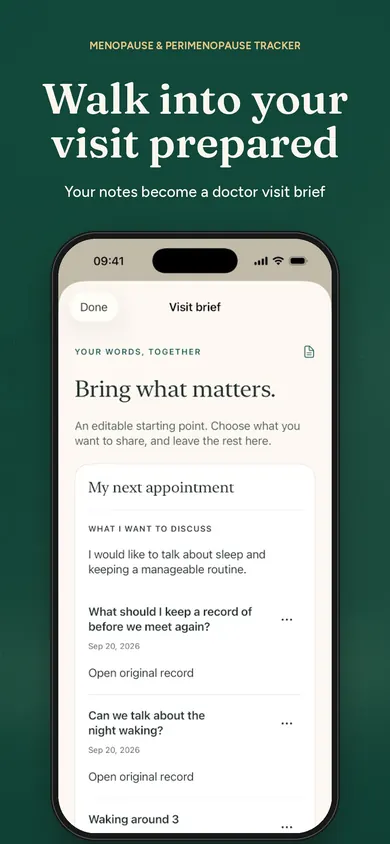
Actual app screenshot. The blank printable above is a separate web companion.
When notes need a home
Keep the words you want to remember.
My Midlife Story lets you log notes, find earlier entries and prepare an editable visit brief. Its current listing includes logging, search, visit briefs and PDF export in the free tier.
Optional Premium subscriptions add deeper organization. Check the App Store and in-app offer for current terms and prices.
Print a sheet, use your own words and keep it somewhere private. You handle storage, searching and sharing yourself.
Choose the app for an ongoing record.
Use its history and visit-brief tools when you want to find and organize earlier notes. This printable does not import into the app.
A note about privacy.
This page has no diary input, signup form, cookies or analytics. It only changes how many blank rows are shown. Hosting infrastructure may process standard request logs.
The app description says health notes stay on your device. Its App Store privacy label separately lists purchases and identifiers as data linked to you. Read the current privacy details before deciding whether the app fits your preferences.
Questions before printing.
Does this diary tell me whether I am in menopause?
No. It is an open-ended note sheet, not a diagnostic questionnaire or a validated symptom scale. Discuss symptoms and concerns with a qualified healthcare professional.
Should I fill in missed days from memory?
Only record what you can honestly recall, and identify approximate or uncertain details. Leaving a gap is better than inventing a precise entry. A blank is not the same as a symptom-free day.
Do I need to record treatment details here?
This sheet does not ask for them. Your clinician may want a separate, accurate list of medicines and supplements. Do not use the diary to decide dose changes or treatments.
Will this sheet be saved online?
The page does not ask you to enter notes. Your browser handles printing or saving a blank PDF. Any later handwritten or PDF annotations are outside this tool.
You do not need a perfect record. You need a place to begin.
Print the sheet for a simple start. If you prefer a searchable record on your phone, explore the free tools in My Midlife Story.
My Midlife Story App Store listing. Source for app features, screenshot, compatibility and privacy-label details; checked November 4, 2026.
This original printable is published by Honest Little Apps. It is not endorsed by Alberta Health Services and has not been independently reviewed by a clinician. It is a recording aid, not medical advice, a symptom assessment or an instruction to delay seeking care.
Useful for someone else?
Share the public guide. Your entries and results are not included.
 MY MIDLIFE STORY / NOTE TO SELF